
Concrete Pathways & Footpaths
Concrete pathways, footpaths and side access across North Brisbane.
Concrete pathways and footpaths across North Brisbane
Paths are the small job that makes the biggest daily difference. A properly built path stops mud being tracked inside, makes the bins and the mower easy to move, gives visitors an obvious way to your front door, and ties the whole property together visually. OZI Concreting installs concrete pathways and footpaths in North Brisbane — straight runs, curves, side access, entry paths and garden links — built to be durable, practical and good-looking.
Paths are also where accessibility matters most. A path that’s too narrow, uneven or steeply cross-falling is a genuine hazard for anyone with a walker, a pram or unsteady footing, so we set widths and falls with real use in mind.
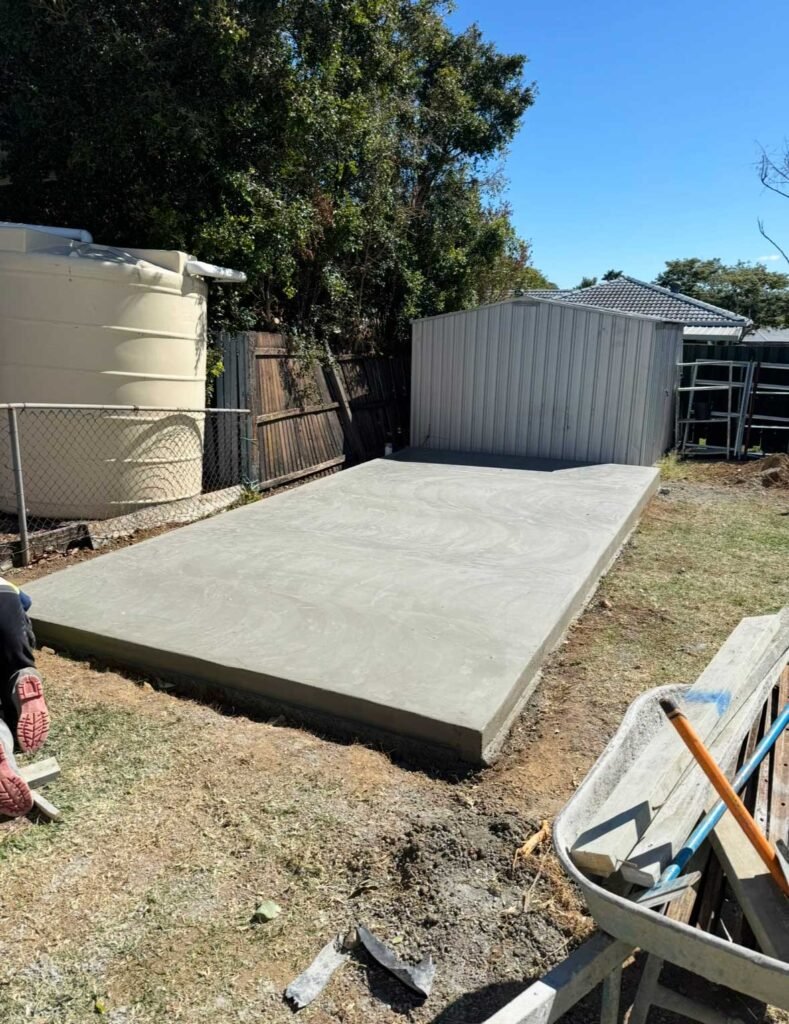
The problems we solve
From muddy side access and cracked paths to poor drainage and trip hazards, we create practical concrete pathways that are safe, durable and easy to maintain.
Muddy Access Areas
Worn dirt tracks and muddy side access that turn to slop after every storm.
Cracked & Uneven Paths
Uneven, cracked or lifted paths that have become a trip hazard.
Paths Too Narrow
Paths too narrow for a wheelie bin, a mower, a pram or a wheelchair.
Poor Water Drainage
Water pooling on the path or running toward the house instead of away.
Tree Root Damage
Old paths lifted and broken by tree roots.
No Clear Walkway
No defined route from the driveway or street to the front door.
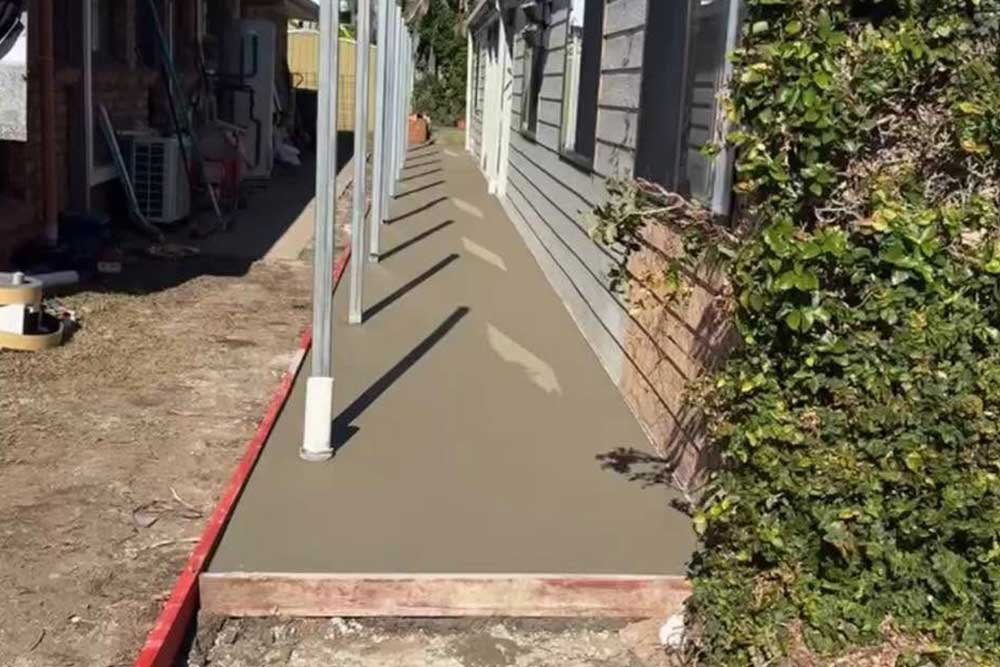
What we do / What's included
- On-site walk-through to set the route, width and levels around existing features
- Removal of old paths, pavers or stepping stones where required
- Excavation, base preparation and compaction
- Formwork including curved and shaped sections
- Reinforcement appropriate to the path and its use
- Correct cross-fall and longitudinal fall so water sheds away from buildings
- Placement and finishing — broom, exposed aggregate or decorative
- Steps, small ramps and transitions where levels change
- Control joints, clean edges and tidy junctions with driveways, patios and lawn
- Removal of spoil and full site clean-up
Types of pathway
Straight pathways
Front entries, side access and direct runs, the most economical option.
Curved pathways
Flowing routes around gardens, trees and features.
Decorative pathways
Soloured, stencilled or feature finishes for entry paths on show.
Exposed aggregate pathways
Durable, textured and low-maintenance in high-traffic areas.
Side access and service paths
Practical routes for bins, mowers, air-conditioning units and meter access.
Footpaths and connecting paths
Linking driveways, patios, pool areas, sheds and gates.
Do's and Don'ts
Do’s
- Make the path wider than feels necessary — bins, prams and two people walking side by side all need room
- Follow the route people actually walk, not the route that looks tidiest on a plan
- Get a slight cross-fall on every path so water runs off rather than sitting
- Think about lighting and edging at the same time; it's easier before the path goes in
- Consider a textured finish for shaded paths that stay damp and grow algae
Don'ts
- Don't run a path hard against the house without a proper expansion joint and fall away from the wall
- Don't build over the top of shallow tree roots and expect the path to survive; deal with the roots or shift the route
- Don't lay a path across a natural drainage line without planning where the water will go instead
- Don't use a smooth trowel finish outdoors — paths get wet, and smooth concrete gets slippery
- Don't concrete over water meters, inspection openings, stormwater pits or service access points
Frequently Asked Questions
Wider than most people first think. A single-file garden path is one thing; a path that needs to take a wheelie bin, a mower, a pram or a wheelchair needs meaningfully more room. We'll set the width on site with you based on what will actually use it.
In everyday use, nothing — both describe a walking surface. Note that the strip between the road and your property boundary is council-controlled land, so work there has different rules to work inside your boundary.
Yes. Curved formwork takes more time and therefore costs a little more, but a curve around a garden bed or a tree usually looks far better than forcing a straight line.
They can, over time. Where roots are a known issue we'll discuss options — rerouting the path, root barriers, or removing the problem before we pour. Ignoring roots guarantees the problem returns.
A broom finish for grip and value; exposed aggregate where the path is on display and gets heavy traffic; decorative finishes for entry paths where appearance matters most.
Yes, appropriate reinforcement helps control cracking and holds the path together if the ground moves. What's suitable depends on the width, the ground and the use.
Where levels change, steps or a graded ramp may be needed.
Most residential paths are a short job — preparation and formwork, then a pour, then curing before use. Access and the amount of demolition drive the timeline more than the size does.
Yes — we break out and remove the old path and rebuild it properly, dealing with whatever caused the failure rather than repeating it.
Usually, if it's the same finish. Pouring both at once gives the best match; matching an aged driveway later will be close but not identical.